SCADA and the Unified Namespace: Why Real-Time Data Needs a Common Language
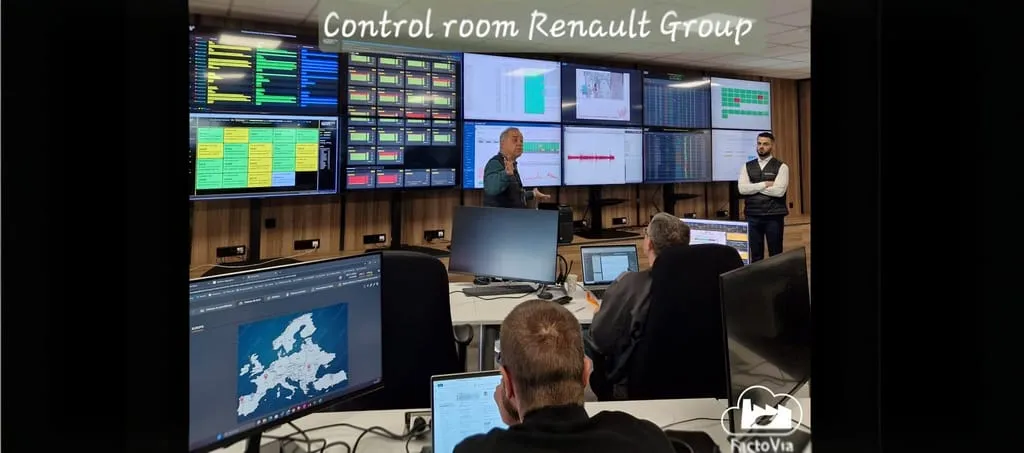
For years, SCADA systems have been the backbone of industrial operations. They collect data from remote sensors, pump it into a control room, and let operators watch tank levels or motor speeds on an HMI. That model worked when the only consumer of that data was a human staring at a screen. But Industry 4.0 changed the game. Now we want that same data to feed digital twins, feed predictive maintenance models, and travel across the plant without manual mapping. That is where the conversation shifts from SCADA as a silo to SCADA as one node in a larger information ecosystem.
The core problem is fragmentation. A typical plant has PLCs from Siemens, RTUs from Rockwell Automation, historians from Wonderware, and an HMI layer built on Ignition by Inductive Automation. Each system speaks its own dialect of OPC UA, MQTT, or a dozen vendor-specific protocols. Getting a single pressure reading from a valve to appear in both the SCADA screen and the corporate analytics dashboard often requires writing custom adapters that break the moment one side updates. This is not just a technical annoyance. It introduces latency, increases the attack surface for cybersecurity incidents, and makes it hard to trust the data.
The Silos That Hold Us Back
SCADA excels at polling. It reads a register, logs a value, and triggers an alarm if the value exceeds a threshold. That polling model is deterministic and reliable. But it is also narrow. The historian stores the data in a format that the HMI understands, but the enterprise data lake cannot read it without transformation. The result is two parallel universes: the real-time data that operators see and the delayed, cleaned-up data that analysts see. The two rarely agree on a single point in time.
I have walked through plants where the operators watch a level transmitter on their SCADA screen and the maintenance team reads the same sensor through an IoT gateway. The numbers differ by two percent because each system applies its own scaling factor. Nobody knows which one is right. That uncertainty erodes trust and makes it nearly impossible to build an accurate digital twin. A digital twin only works if every data source refers to the same tank, the same pressure, and the same timestamp.
Where Real-Time Data Meets Architecture
The fix is not to replace SCADA. The fix is to give SCADA a way to publish its data into a shared namespace that every other system can subscribe to. That is where the concept of a Unified Namespace comes in. Instead of point-to-point connections between the PLC and the historian, the historian and the HMI, the HMI and the analytics platform, you introduce a single logical layer where data lives with a common meaning. OPC UA and MQTT are the transport protocols that enable this, but the namespace is the semantic glue.

For example, a temperature reading from a Siemens PLC gets published to the Unified Namespace with a tag like "Reactor3.Temperature.Celsius". The SCADA system subscribes to that tag and displays it. The digital twin subscribes to the same tag. The historian records it. The edge computing node that runs a predictive model also subscribes. Everyone reads the same value, at the same moment, without any transformation step. That is the promise of a unified data layer.
The Practical Trade-Offs
Moving from a traditional SCADA architecture to a namespace-oriented one requires some hard choices. The first is latency. SCADA systems are optimized for fast polling cycles, often in the millisecond range. Adding a middleware layer, even a fast one, introduces a few extra milliseconds. In most processes that is fine. In high-speed packaging lines or turbine control, it might not be. You have to decide where to keep the direct SCADA-to-PLC path and where to route through the namespace.
The second trade-off is cybersecurity. A Unified Namespace that spans the OT network and the IT network is a broader attack surface. If an attacker compromises the namespace broker, they might read or inject data across the whole plant. The mitigation is strict network segmentation, encrypted transport with TLS, and authentication at every subscription point. OPC UA has built-in security models for this. MQTT can be secured with certificates. But the operational team must enforce those policies, not just the IT security team.
The third trade-off is organizational. Plant engineers often resist changes to the SCADA layer because it is a safety-critical system. They are right to be cautious. The namespace should not modify the SCADA historian or the HMI logic. It should sit alongside it, reading from the same PLC registers but writing into a separate broker. The SCADA system remains the authority for control actions; the namespace becomes the authority for data sharing.
Where IIoT and Edge Computing Fit
The Industrial Internet of Things (IIoT) pushes data collection further out to the edge. Instead of wiring every sensor back to a central PLC, you put an edge computing device near the sensor that preprocesses the signal and publishes it via MQTT. That edge node can also buffer data if the network drops, then replay it when connectivity returns. SCADA systems traditionally do not handle buffered replay well. They expect a continuous stream. The Unified Namespace can absorb that replay and present it to the SCADA historian as a normal feed, smoothing over the gap.
Ignition by Inductive Automation has become a popular SCADA platform partly because it supports MQTT out of the box and can act as both a subscriber and a publisher to a namespace. Wonderware and Rockwell Automation have added similar capabilities in their recent releases. The industry is moving in this direction, but the pace is uneven. Some legacy installations still rely on custom serial protocols that predate TCP/IP. For those, the namespace must include a protocol gateway that translates the old signals into modern tags.
Building Trust in the Data
SCADA has a reputation for being trustworthy because it is simple. A PLC sends a 4-20 mA signal, the RTU converts it to a number, the HMI shows it. There is no database, no caching, no transformation. When you introduce a Unified Namespace, you introduce a hop. To maintain trust, the namespace must guarantee that the value it publishes is exactly the value the PLC sent, with no rounding, no interpolation, and no delay longer than a configured threshold. That requires careful design of the data path and continuous monitoring of the broker's health.
One approach is to timestamp the data at the source using the PLC's clock, then propagate that timestamp unchanged through the namespace. The subscribing system can then decide if the data is fresh enough for its purpose. A digital twin might accept data that is two seconds old. A safety interlock might require data that is less than 100 milliseconds old. The namespace does not enforce those decisions. It simply carries the data and the metadata, and each consumer chooses what to trust.
The Role of Historians and Analytics
Traditional historians like those from Wonderware or OSIsoft are designed to collect data from SCADA systems and store it for years. They are good at compression and retrieval but bad at real-time sharing. A Unified Namespace can feed the historian the same data it feeds the HMI, which means the historian no longer needs its own polling engine. That simplifies the architecture and reduces the load on the PLCs. It also means the historian's data matches exactly what the operator saw, eliminating the reconciliation problem.
Analytics platforms that consume real-time data for predictive models or dashboards can subscribe directly to the namespace. They do not need to query the historian and then wait for a batch export. This makes the analytics layer reactive rather than retrospective. When a pump's vibration pattern starts to shift, the model can alert the operator within seconds, not hours. That is the difference between preventive maintenance and predictive maintenance.
Cybersecurity in a Connected World
SCADA systems were built when the control network was physically isolated. Air-gapped networks were the norm. Industry 4.0 and IIoT have eroded that isolation. Every connection to a namespace broker is a potential entry point for ransomware or data exfiltration. The solution is not to disconnect everything. The solution is to apply defense in depth. Use separate brokers for different security zones. Encrypt all traffic. Authenticate every publisher and subscriber. Log every subscription change. And never let the namespace broker write back to the control system. Read-only subscriptions from the namespace to the SCADA layer preserve the safety boundary while enabling data sharing.
Where We Go From Here
The SCADA system is not going away. It remains the most reliable way to monitor and control physical processes. But its role is shifting. It is no longer the sole source of truth. It is a producer of data that feeds a larger, more dynamic information ecosystem. The Unified Namespace provides the common language that makes that ecosystem possible. The protocols are mature. The hardware is cheap. The missing piece is the will to change the architecture from point-to-point to publish-subscribe.
For every plant engineer reading this, the recommendation is simple: start small. Pick one sensor, one PLC, and one namespace broker. Publish that sensor's value to the broker and subscribe to it from a simple dashboard. Prove that the data matches the SCADA screen. Then add a second consumer, maybe a digital twin proof of concept. Once trust is built, scale gradually. The goal is not to replace SCADA. The goal is to make SCADA part of a system that is greater than the sum of its parts.